Source disposable pet 6-grid egg tray for poultry, storage, and transport
Find 30 verified options for the disposable pet 6-grid egg tray suitable for chicken, duck, and general egg storage. Compare features like biodegradable materials, single or multiple compartments, and customization availability from suppliers in Jiangsu, China.
Key considerations
Products List

Disposable Pet Plastic Clear 30 Holes Egg Tray
$0.04 - $0.36
MOQ: 50000 Pieces
JIANGSU JINCAI POLYMER MATERIALS SCIENCE AND TECHNOLOGY CO., LTD.


Plastic Pet Polyethylene Terephthalate Egg Tray
$0.04 - $0.36
MOQ: 50000 Pieces
JIANGSU JINCAI POLYMER MATERIALS SCIENCE AND TECHNOLOGY CO., LTD.


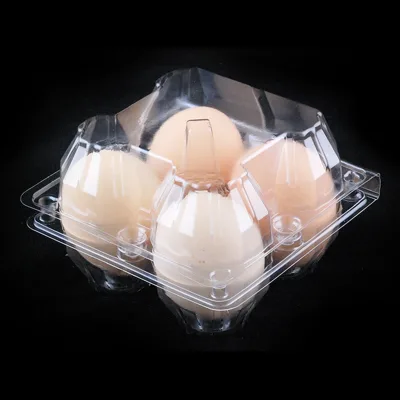
4 Cells One-Piece Household Pet Plastic Egg Tray
$0.04 - $0.36
MOQ: 50000 Pieces
JIANGSU JINCAI POLYMER MATERIALS SCIENCE AND TECHNOLOGY CO., LTD.

Wholesale Durable Pet Chicken Eggs 12 Grid Trays Disposable Pet Plastic Egg Tray with Cover
$0.06 - $0.20
MOQ: 100000 Pieces

Customized Size Disposable Pet Food Container Clear Plastic Egg Pet Tray
$0.04 - $0.09
MOQ: 50000 Pieces


High Quality Disposable 12 Hole Egg Trays Transparent Pet Plastic Egg Trays
$0.07 - $0.10
MOQ: 10000 Pieces


High Quality Disposable 10 Hole Egg Trays Transparent Recycled Pet Plastic Egg Trays
$0.03 - $0.05
MOQ: 10000 Pieces




Comprehensive Sourcing Guide
Strategic Sourcing Guide for Disposable PET 6-Grid Egg Trays
Understanding Material Composition and Physical Specifications
When sourcing disposable PET 6-grid egg trays, the primary focus must be on the intersection of material integrity and structural design. The core keyword implies a specific configuration: a single unit divided into six distinct compartments, optimized for the storage and transport of eggs. Based on the available product data, the material landscape for these items is diverse, ranging from biodegradable options to traditional plastics. Buyers must carefully distinguish between products labeled as "PET Material" and those explicitly described as "Plastic" or "Bamboo fiber."
The physical dimensions and volume are critical variables in this procurement category. Observed specifications indicate a volume range spanning from 180ml to 800ml, with specific models like HSQY-PET and SD-124 appearing in the market. The shape of the tray is predominantly rectangular, though square and round variants are also noted in the broader category. For a 6-grid configuration, a rectangular shape is the industry standard to maximize space efficiency during shipping. The processing type is frequently identified as "Pulp moulding," which suggests a specific manufacturing technique often associated with biodegradable materials, yet the presence of "PET Material" and "Plastic Type: PET" indicates that injection-molded or thermoformed plastic trays are also prevalent.
Buyers should verify the exact material composition of the specific 6-grid unit they intend to purchase. While some listings highlight "Biodegradable" and "Eco-friendly" features, others emphasize "Recyclable" properties without the biodegradable claim. The "Frozen-Resistence" attribute of minus 20 degrees Celsius is a specific technical capability observed in certain models, which is vital if the supply chain involves frozen storage or cold chain logistics. However, this specific temperature rating should not be assumed for all PET trays unless explicitly confirmed in the product datasheet. The color options observed include yellow and transparent, with the transparent variant often preferred for visual inspection of the product inside.
Compliance, Certification, and Regulatory Standards
Navigating the regulatory landscape for food-contact packaging requires rigorous verification of certifications. The market data presents a mix of management and product-specific certifications that buyers must validate. Prominent certifications observed include BSCI, FSC, BRC, ROHS, FDA, and CE / EU. It is crucial to understand the distinction between these; BSCI and FSC often relate to supply chain management and forestry standards, whereas FDA and CE / EU are direct indicators of safety for food contact and European market entry.
The "Product certifications" section lists ROHS and FSC, while "Management certifications" include BSCI and BRC. For a product intended for food use, specifically eggs, the FDA certification is a high-priority verification point for markets in North America. Similarly, CE / EU certification is essential for European distribution. However, buyers must not assume that every supplier offering a PET egg tray possesses all these certifications. The data shows that certification status varies by product model and manufacturer. For instance, while some models carry "Food Container Feature: Microwavable," this claim must be cross-referenced with the specific material safety data sheet (MSDS) and the relevant food contact regulations of the destination country.
The "prod_standard" field lists "PET Material" and "Customized" as standards, but also includes specific weight standards like "9.1g." This suggests that weight consistency is a quality metric used by some manufacturers. Buyers should request documentation proving that the specific 6-grid tray model meets the food safety standards of their target market. Relying solely on the presence of a "CE" mark without verifying the specific directive (e.g., Framework Regulation (EC) No 1935/2004) can lead to compliance gaps. Furthermore, the "BRC" certification is a global benchmark for food safety, and its presence is a strong indicator of a supplier's quality management system, but it must be current and applicable to the specific production site.
Cost Drivers and Minimum Order Quantity Analysis
The economics of sourcing disposable egg trays are heavily influenced by volume, material type, and customization requirements. The observed MOQ (Minimum Order Quantity) range is extensive, spanning from 1,000 to 100,000 units. This wide variance indicates that the market supports both small-scale trials and large-scale industrial procurement. Specific models, such as those with the model number SD4-2, are associated with an MOQ of 50,000, suggesting that higher-volume orders are required for certain specialized or custom configurations.
Price is another significant variable, with observed listings ranging from $0.01 to $1.00 USD per unit. This broad range reflects differences in material costs (biodegradable pulp vs. virgin PET plastic), production complexity, and order volume. The "Custom Order: Accept" and "Customization: Available" attributes imply that buyers can tailor the tray to specific needs, such as branding or unique grid layouts, but this customization will likely impact the unit price and the MOQ. The "Small Orders: Accepted" attribute suggests that some suppliers are flexible, potentially lowering the barrier to entry for smaller buyers, though the unit cost may be higher.
Packaging methods also contribute to the final landed cost. The data lists "PE Film in Carton," "Carton," and "Plastic Bag+ Carton" as common packing methods. The choice of packaging affects the number of units that can be shipped per container, influencing freight costs. For a 6-grid tray, the stacking efficiency is paramount. A supplier offering "Carton" packing with optimized stacking might reduce shipping costs compared to one using loose "Plastic Bag" packing. Buyers should calculate the total cost of ownership, including freight and packaging, rather than focusing solely on the unit price. The "Sample: Free" attribute is a valuable cost-saving measure for the initial evaluation phase, allowing buyers to test the product without incurring material costs.
Typical Applications and Functional Performance
The functional application of a disposable PET 6-grid egg tray extends beyond simple storage. The primary "Usage" listed is "Egg," but the data also includes "Chicken," "Duck," "Food," "Tableware," and "Spice." This indicates versatility in the poultry and food service sectors. The "Industrial Use: Food" classification confirms that these trays are designed for the food industry, where hygiene and safety are paramount.
The "Feature" set includes "Disposable," "Recyclable," "Eco-Friendly," and "Stocked." The "Disposable" nature suggests these trays are intended for single-use scenarios, such as retail packaging or direct-to-consumer delivery, where washing and reuse are not feasible. However, the "Recyclable" and "Eco-Friendly" features appeal to sustainability-conscious markets. The "Biodegradable" attribute, found in some listings, offers an alternative for buyers seeking to reduce plastic waste, though this often comes with a different price point and potentially different durability characteristics.
Performance attributes like "Microwavable" are critical for specific applications. If the egg tray is intended for reheating food or cooking eggs directly in the tray, the "Food Container Feature: Microwavable" is a non-negotiable specification. Conversely, if the tray is for cold storage or transport only, this feature is less relevant. The "Frozen-Resistence" of minus 20 degrees Celsius is a specific performance metric that ensures the tray maintains structural integrity in cold environments. This is particularly important for frozen egg products or cold chain logistics. The "Printing Page: Single" attribute indicates that branding options are available, which is useful for retailers who want to display their logo on the packaging.
Supplier Evaluation and Quality Assurance Protocols
Evaluating suppliers for disposable PET egg trays requires a multi-faceted approach that goes beyond price comparison. The "Brand Name: WEIHAI" and "prod_origin: Jiangsu, China" provide geographical context, indicating that the majority of suppliers are located in China, specifically in the Jiangsu province. This region is a known hub for plastic and packaging manufacturing. However, buyers should verify the specific factory location and production capacity, as "Jiangsu" is a broad region.
Quality control should be a central part of the supplier evaluation. The "Warranty: 2 Years" attribute is an unusual claim for disposable packaging and may refer to the durability of the mold or the structural integrity of the tray under specific conditions. Buyers should clarify the scope of this warranty. Additionally, the "Advantage: Disposable and Recyclable" is a marketing claim that must be backed by tangible evidence, such as third-party test reports or material certifications.
The "Model Number" variations, such as HSQY-PET, HS, KZCB-zj-#0001, and SD-124, suggest that different suppliers or product lines have unique identifiers. Buyers should ensure that the model number corresponds to the exact 6-grid configuration they require. The "Customized" standard and "Custom Order: Accept" attributes indicate that suppliers are willing to adapt their products, but this requires clear communication of specifications. Buyers should request samples of the specific model to verify the grid size, wall thickness, and overall fit for the intended egg type (e.g., chicken vs. duck).
Long-Term Procurement and Supply Chain Considerations
Sourcing disposable PET 6-grid egg trays is not just a one-time transaction but a strategic decision that impacts long-term supply chain stability. The "Custom Order: Accept" and "Customization: Available" attributes suggest that buyers can build a long-term relationship with suppliers who can adapt to changing market needs. However, customization often leads to longer lead times and higher MOQs, which must be factored into inventory planning.
The "PE Film in Carton" and "Plastic Bag+ Carton" packing methods highlight the importance of packaging integrity during transit. For long-term procurement, buyers should negotiate packaging standards that minimize damage and maximize container utilization. The "Small Orders: Accepted" attribute offers flexibility for businesses that need to adjust their order volumes based on seasonal demand or market fluctuations.
Sustainability is a growing consideration in the packaging industry. The presence of "Biodegradable" and "Eco-Friendly" options alongside traditional "PET" and "Plastic" materials indicates a market trend toward greener solutions. Buyers should monitor regulatory changes in their target markets regarding single-use plastics and biodegradable materials. Suppliers with "FSC" and "BRC" certifications are better positioned to support sustainability goals, but buyers must verify that these certifications are current and applicable to the specific product line.
In conclusion, sourcing a disposable PET 6-grid egg tray requires a careful balance of technical specifications, regulatory compliance, cost management, and supplier reliability. By focusing on the verified attributes such as material type, certification status, and performance metrics, buyers can make informed decisions that align with their operational needs and sustainability objectives. The wide range of observed MOQs and price points offers flexibility, but the complexity of the market demands thorough due diligence to ensure the selected product meets all functional and regulatory requirements.
FAQs
What materials are used for disposable pet 6-grid egg trays?
These trays are primarily made from PET plastic or biodegradable bamboo fiber. Some models also utilize pulp moulding for eco-friendly options. Buyers must verify the specific material composition as listings vary between recyclable plastic and biodegradable pulp.
Which certifications are available for food contact safety?
Common certifications include FDA, CE, EU, BRC, and FSC for product and management standards. ROHS is also listed for specific models. Buyers should confirm that the specific supplier holds current certifications relevant to their target market's food safety regulations.
Can I order custom sizes for the 6-grid configuration?
Yes, custom orders are accepted with available customization options for shapes and volumes. Models like HSQY-PET and SD-124 exist, but specific grid layouts may require tailored production. Buyers should expect higher MOQs and lead times for customized specifications.
What is the minimum order quantity for these egg trays?
The observed MOQ range spans from 1,000 to 100,000 units depending on the supplier and model. Specific models like SD4-2 may require an MOQ of 50,000 units. Some suppliers accept small orders, but unit costs may be higher for lower volumes.
How are the trays packaged for shipping?
Packaging typically involves PE film inside cartons or plastic bags combined with cartons. The specific method depends on the supplier's standard, such as PE Film in Carton or Plastic Bag plus Carton. Proper packaging ensures stacking efficiency and product protection during transit.
Are these trays suitable for frozen storage?
Certain models feature frozen resistance down to minus 20 degrees Celsius. This capability ensures structural integrity during cold chain logistics or frozen egg storage. Buyers must verify this specific temperature rating for their intended frozen applications before purchasing.